
INSIGHTS · PEOPLE, IDEAS & IMPACT
When qualifications
are not enough
Turning overlooked potential into opportunity, without dismissing the value of education.

A video of a Kenyan man beside scattered academic documents has prompted a painful question: what happens when years of learning do not lead to the opportunities a person hoped for?
The story circulating online deserves care. K24 reported the incident in Kisii and said the man’s identity and interview circumstances had not been independently established. Other accounts have placed it in Nairobi. Claims about fifteen years of unemployment and particular qualifications should not be treated as verified facts. Read K24’s report.
We do not need to turn someone’s distress into a spectacle to recognise the wider concern. Education can represent years of sacrifice, family support and hope. When doors remain closed, the loss is not only income. Confidence, dignity and a sense of direction can suffer too.
The problem is not a lack of potential
Kenya needs more pathways from knowledge to useful work. Employment, fair recruitment, apprenticeships and stronger businesses remain essential. Entrepreneurship is not a substitute for those responsibilities, nor is it the right route for every jobseeker.
For people with a practical idea, however, enterprise can offer another route. Someone may understand why crops spoil before reaching a buyer, why a community lacks affordable services, or why reusable materials become waste. That knowledge can be valuable. But recognising a problem is not the same as knowing how to build a viable response.
The missing support may be a place to test assumptions, a mentor who asks difficult questions, basic financial discipline, a reliable collaborator, or access to customers. Telling someone to “just start a business” skips all of this.
What Ubunifu is working to change
Ubunifu Institute brings people, practical learning and enterprise support together around two connected challenges: unemployment and climate change. We are not a university or a college. Our social-change workshops and enterprise-development approach complement formal education by helping people apply what they know to problems that matter.
Potential needs a pathway: from understanding a problem to testing an idea, building responsibly and learning from real results.
Our vision includes stronger rural and local economies, not only more activity in major cities. A useful enterprise can create livelihoods where people already live, serve its community and use resources more responsibly. Climate considerations belong in the business model from the beginning: materials, energy, water, waste and resilience all matter.
This does not mean every idea must be a new invention. An improved service, a better way to reach an underserved market, or a practical adaptation can be meaningful when it solves a genuine problem and has a workable model.
A journey, not a promise of instant success
Ubunifu’s approach is a staged incubation journey. Each stage helps people learn what their idea needs next. Progression depends on readiness, evidence and programme requirements, rather than a promise that everyone will move through every stage.
Identification
Explain the problem you care about, your early idea and why you are ready to explore it.
Foundation Course
Develop your thinking through practical learning and an evolving Business Plan.
Enterprise Formation
Strengthen the proposed enterprise, its team, responsibilities and operating approach.
Boot Camp
Selected, ready participants intensively test and refine their approach with practical support.
Enterprise Launch
Move a prepared venture towards real customers, delivery and accountable operations.
Enterprise Development Support
Continue improving the business, its resilience and its contribution to the community.
Those who do not proceed to Boot Camp are not simply discarded. They can continue accessing the network and available resources while developing at the level appropriate to them. The journey is intended to build capability, not to label people as failures.
Participation does not guarantee employment, investment, sponsorship or progression. What matters is honest learning, stronger decisions and evidence of what can work.
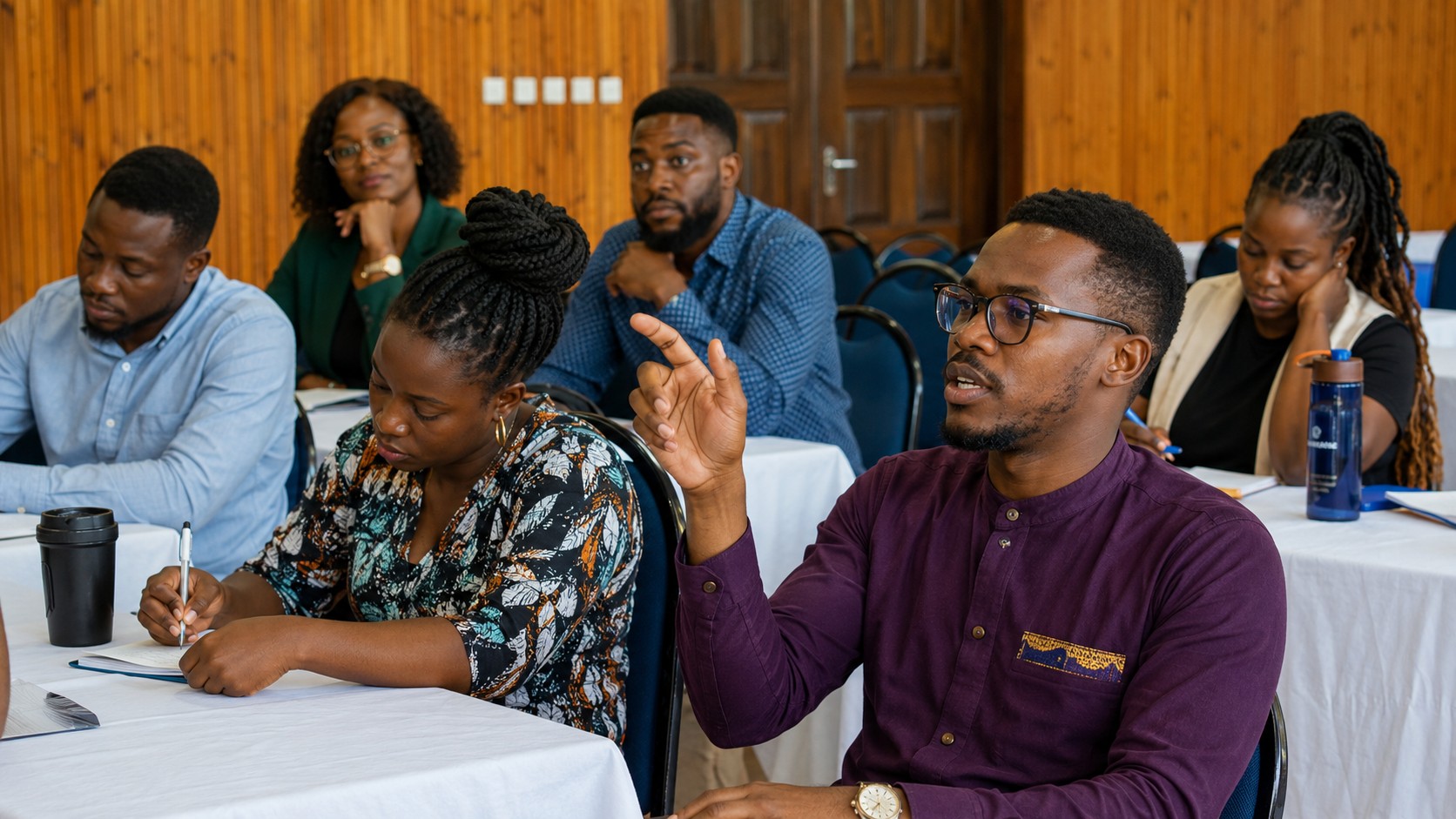
What a learner can gain
The eight-week Foundation Course provides a structured starting point. Learners examine the people affected by a problem, test a possible solution, consider demand and costs, and develop a practical plan. Rather than treating a Business Plan as a document written once and forgotten, the aim is to improve it as understanding grows. Explore the Foundation Course.
Clarity
Describe the problem and the people you intend to serve.
Practical judgement
Test assumptions before committing scarce time and money.
Responsible growth
Connect financial viability with social and environmental impact.
Mentors, peers and partners can challenge weak assumptions and help learners recognise opportunities. Colleges, universities, TVETs, employers and community organisations can contribute knowledge, facilities and connections without replacing their own educational or community roles.

Bring the problem you cannot stop thinking about
You do not need a polished pitch or an established company to begin. We are looking for potential: people who can identify a meaningful social or environmental challenge, are willing to listen to those affected, and are ready to learn, test and improve an idea.
- A real problem you can explain, not only a desire for funding.
- An early solution, useful skill or practical experience to explore.
- Commitment to the learning activities and honest feedback.
- Respect for communities, collaborators and the environment.
- Willingness to build something sustainable rather than promise instant results.
Applicants are assessed against programme requirements. Financial circumstances are considered separately where sponsorship is requested. A degree alone does not determine potential, and lacking a finished proposal does not mean your idea has no value.
YOUR NEXT STEP
Turn an idea into a question worth testing.
Tell us what you want to change, who it would help and what you are ready to learn.
Explore the application →Find your pathEducation should open possibilities, not become a symbol of disappointment. The response to overlooked potential is not another empty promise. It is patient, practical work: supporting people to use what they know, build what their communities need and create opportunities responsibly.
Sources and image note
Reporting reviewed on 14 November 2026. Incident details remain disputed; this article does not identify or diagnose the person shown. The header is an editorial illustration, not documentary evidence or a photograph of an existing Ubunifu project. No third-party video still has been reproduced. Programme information reflects Ubunifu’s current published Foundation page and approved programme direction. All application decisions remain subject to programme requirements.
Use ideas and evidence to inform action.
Insights explore social entrepreneurship, livelihoods, community opportunity and climate responsibility. Articles explain and question; opportunities list specific external calls with their own terms.
01Read insights
Explore published analysis and learning.
Read insights02Browse opportunities
Look separately for current funding, training or other calls.
Browse opportunities03Explore research
Find evidence and the route for a defined research collaboration.
Explore researchBefore you take the next step
Use this checklist to prepare. These ticks stay on this page only: they do not save, submit, approve or complete an application.
An article is not an application, investment recommendation or assurance of eligibility. External providers determine their own awards.